Peppermint: what science says
We know peppermint from grandma’s garden and from the cup after lunch. What is in it, what scientists have studied, and why the difference between peppermint tea and peppermint oil matters.
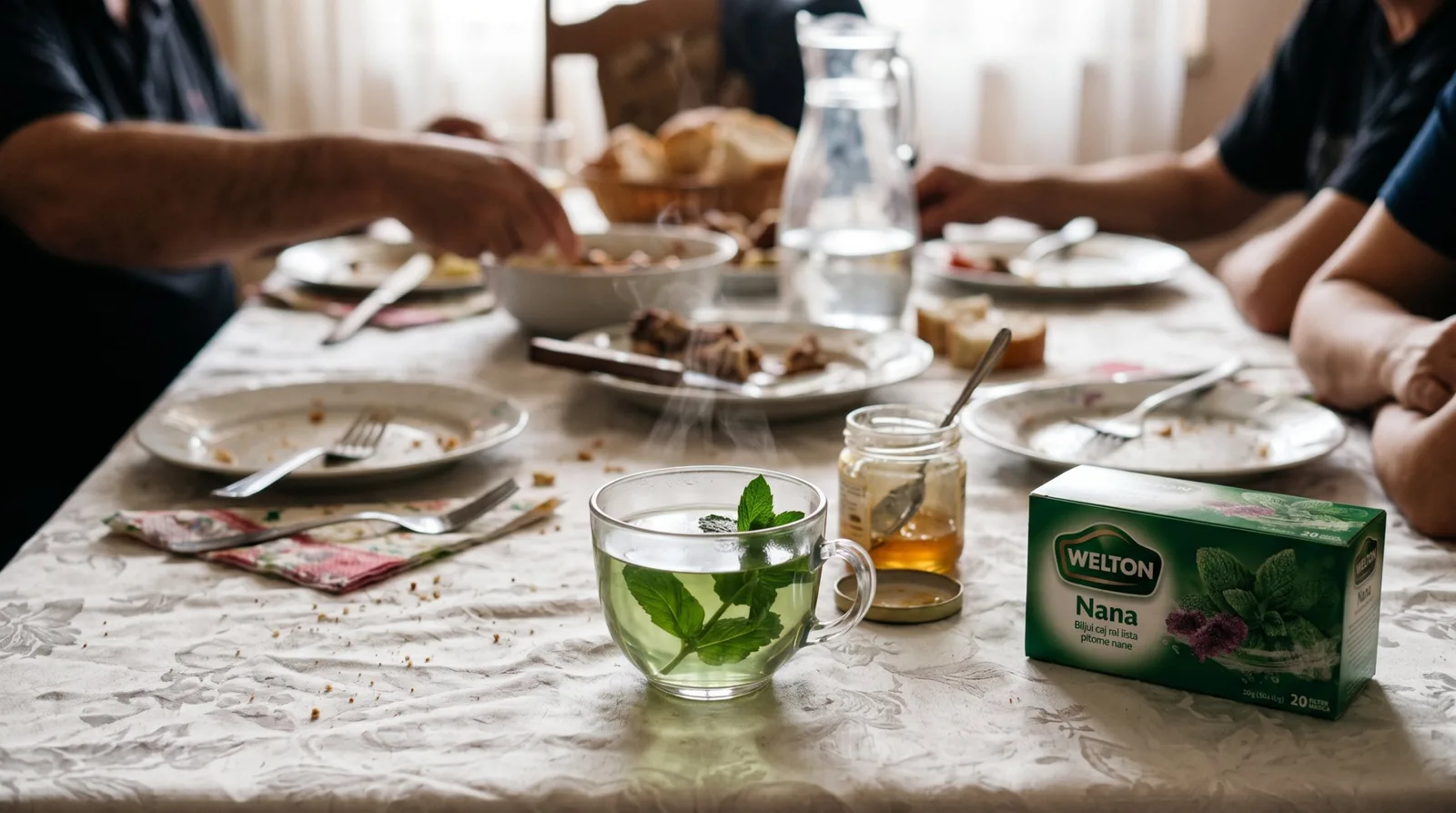
TeaWelton MintSee the tea →Peppermint (Mentha × piperita) owes its aroma to its essential oil, and the main component of that oil is menthol. That is why mint feels fresh even in a hot cup. The leaves also contain polyphenols, as other plants do.
A review published in 2006 by scientists from Tufts University (Phytotherapy Research) concluded that few clinical studies in humans have looked at peppermint tea. Most research has focused on peppermint oil or laboratory studies, not a cup of tea.
That difference matters. Peppermint oil capsules are a concentrated product tested as a medicine, at doses you cannot get from tea. So results for the oil should not be applied to the tea.
What we know for sure: peppermint tea is naturally caffeine-free and refreshing, and people traditionally enjoy it after meals. People with heartburn sometimes find mint doesn’t agree with them, so it is wise to listen to your own body.
For a proper cup: pour boiling water over the tea bag and always cover it, so the essential oils stay in the cup. Take the bag out after 5 to 7 minutes. In summer try it chilled, with ice and lemon.
Note: This article is for information and is about peppermint in general. It does not replace medical advice.