Chamomile: what science says
Chamomile is one of the oldest herbal teas and a regular in the evening cup. How well has it really been studied, what does research show, and what should you keep in mind.
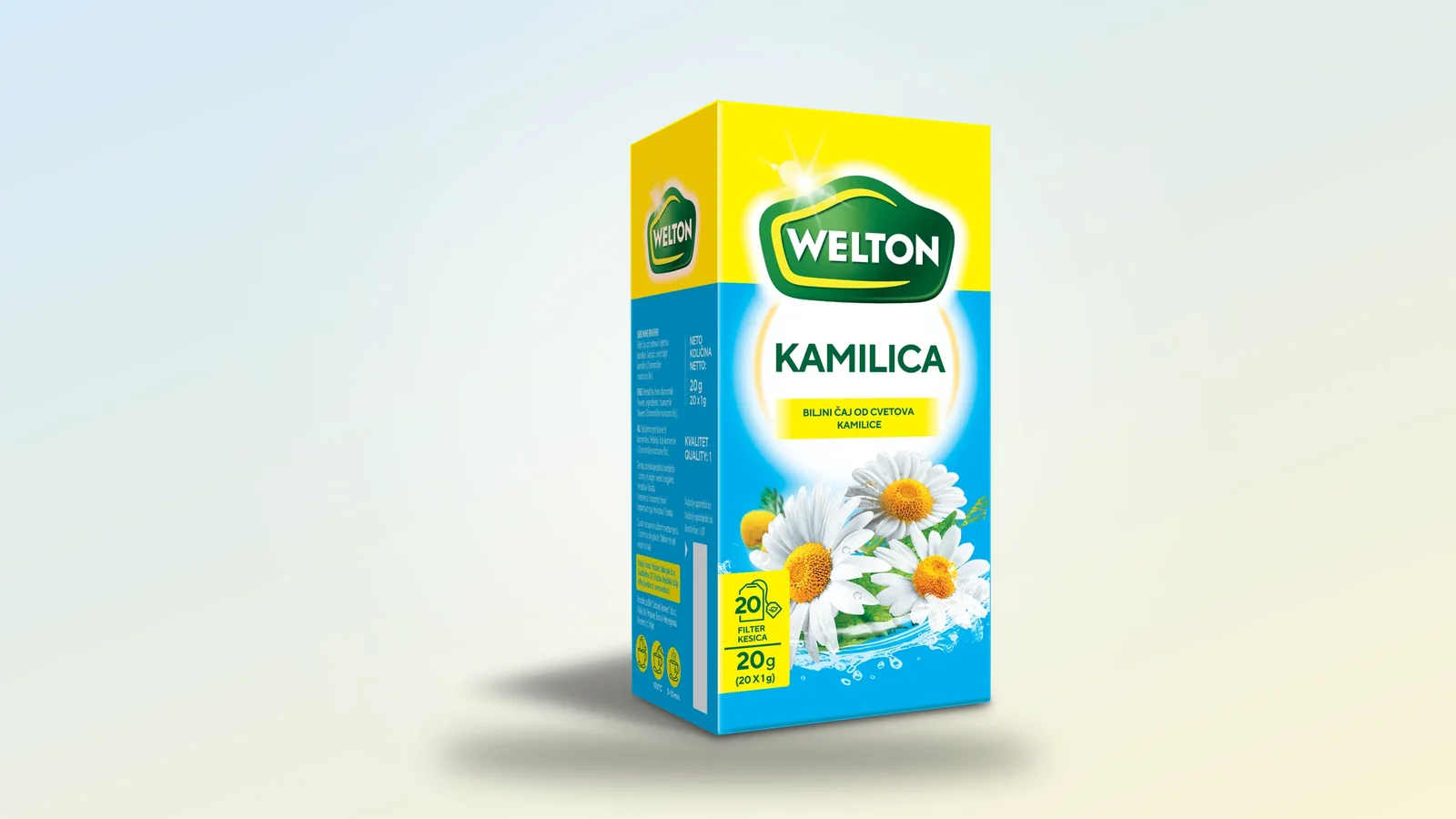
TeaWelton ChamomileSee the tea →Chamomile (Matricaria chamomilla) has been used for centuries, and tea from its flowers is drunk all over Europe. It is naturally caffeine-free, with a mild, slightly honeyed taste, which makes it a favourite evening cup.
There is research, but mostly small studies. Reviews describe a handful of clinical trials, usually with chamomile extract in capsules rather than tea. The results are encouraging, but the evidence is considered limited. Larger and longer studies are needed.
So we speak about chamomile honestly, as a pleasant, warm, caffeine-free drink that fits nicely into an evening ritual, not as a medicine.
What to keep in mind: chamomile belongs to the daisy family, like ragweed, sunflower and marigold. People allergic to those plants may also react to chamomile. If you take blood thinners or sedatives, ask your doctor or pharmacist whether it suits you.
For the best taste: pour boiling water over the tea bag, cover the cup and leave for 5 to 7 minutes. With a spoonful of honey, it is a cup to end the day.
Note: This article is for information and is about chamomile in general. It does not replace medical advice.